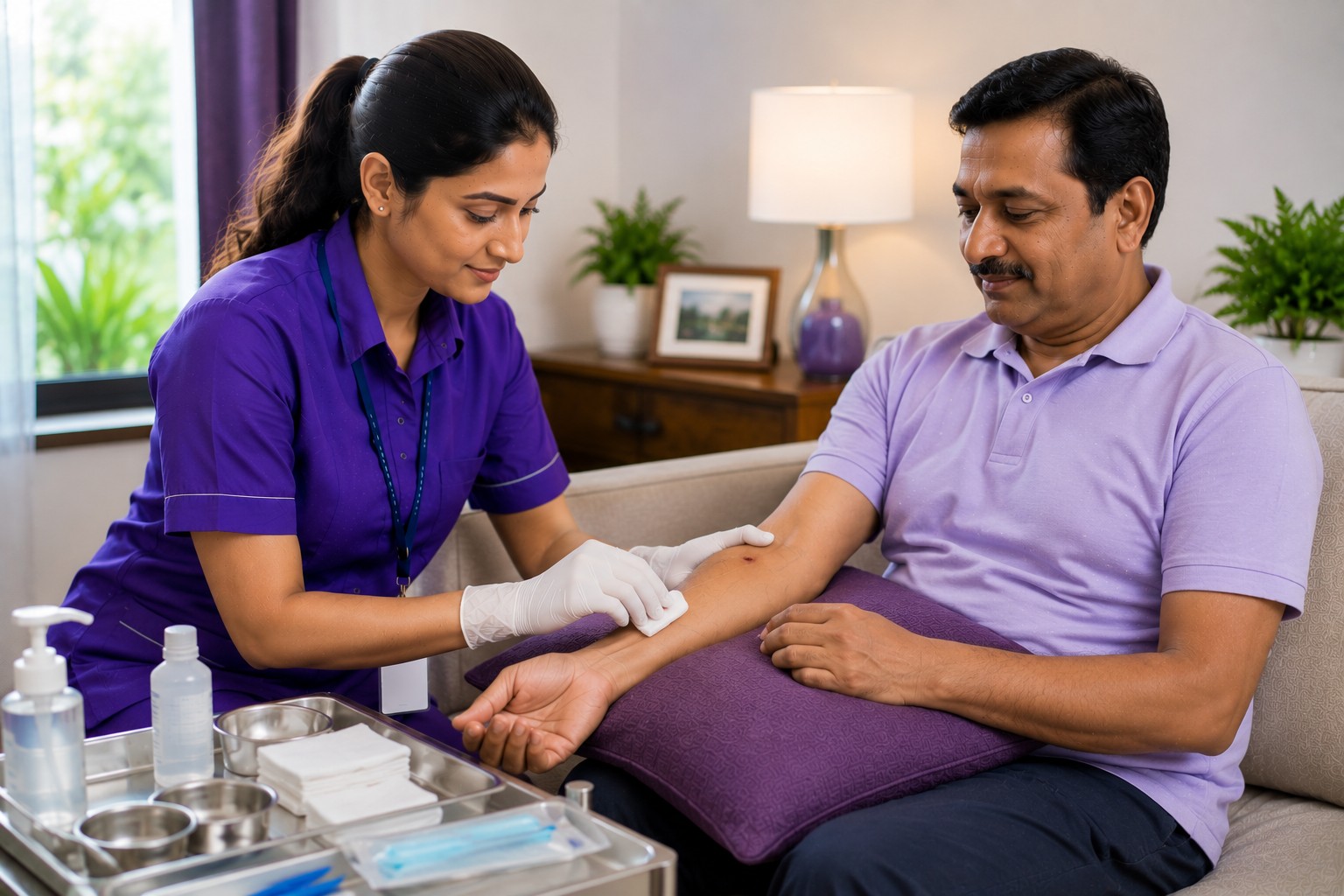
Professional wound care at your doorstep for faster healing and comfort.
At Care At Door, we understand that proper wound care is crucial for healing and preventing complications. Our Basic Wound Dressing service brings skilled and compassionate nursing care directly to your home. Our trained professionals are equipped to handle a variety of wound types, from post-surgical sites to minor injuries and chronic wound management. We prioritize a clean, sterile environment to ensure the highest hygiene standards are met during every dressing change. This service is designed for individuals who need regular, professional wound care without the stress of hospital visits. You can expect meticulous attention to detail, ensuring your wound is cleaned, dressed, and managed effectively for optimal recovery and comfort, right in the familiar surroundings of your home.
Choosing our Basic Wound Dressing service means prioritizing your comfort and well-being. Receiving care in your own home reduces the risk of exposure to hospital-acquired infections and eliminates the anxiety associated with travel and waiting rooms. Our nurses bring all necessary sterile supplies, ensuring a safe and hygienic procedure. This convenience allows for a more relaxed healing process, especially for those with limited mobility or busy schedules. With professional wound care delivered to your doorstep, you can focus on recovery while we manage the essential dressing changes with expertise and care.
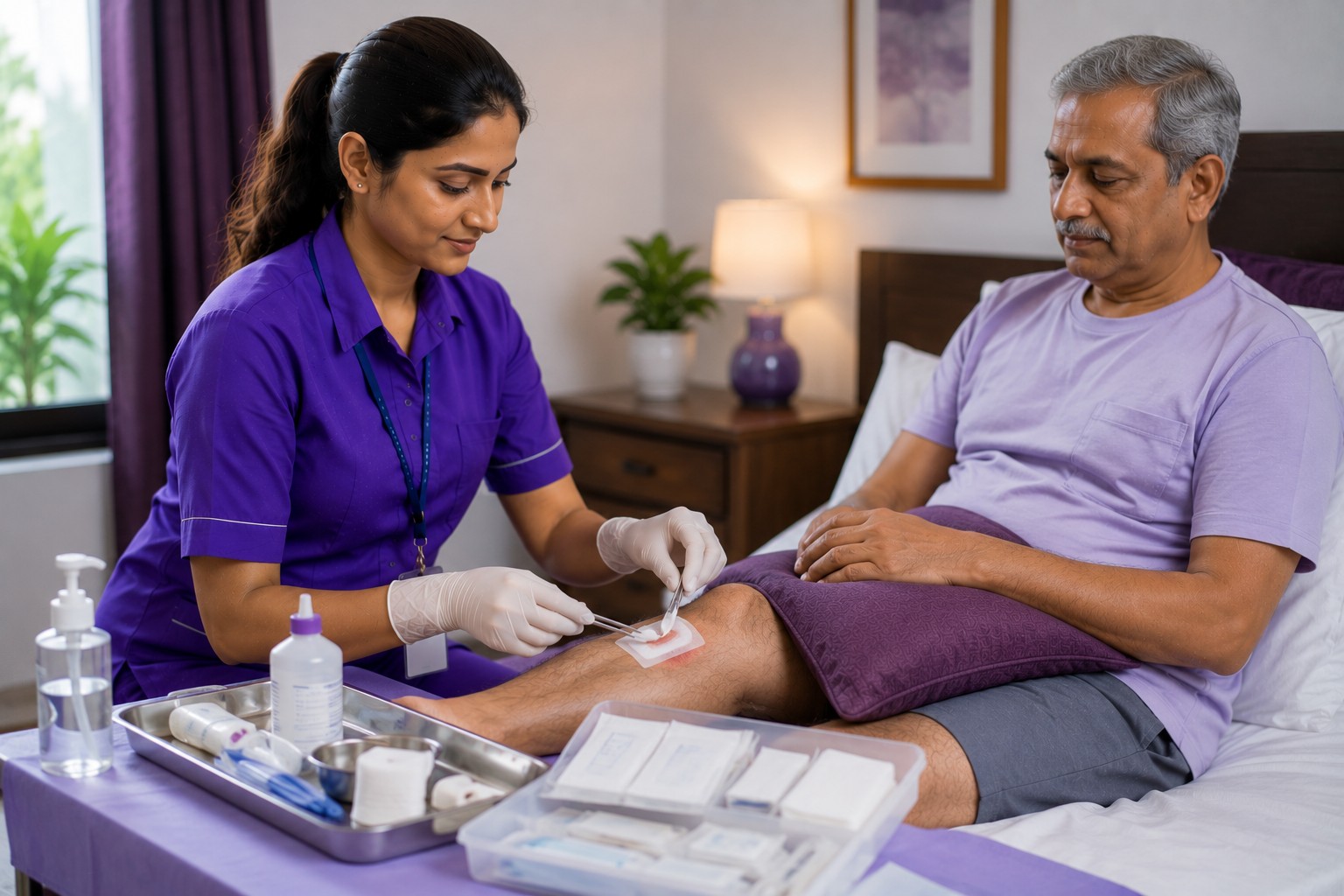
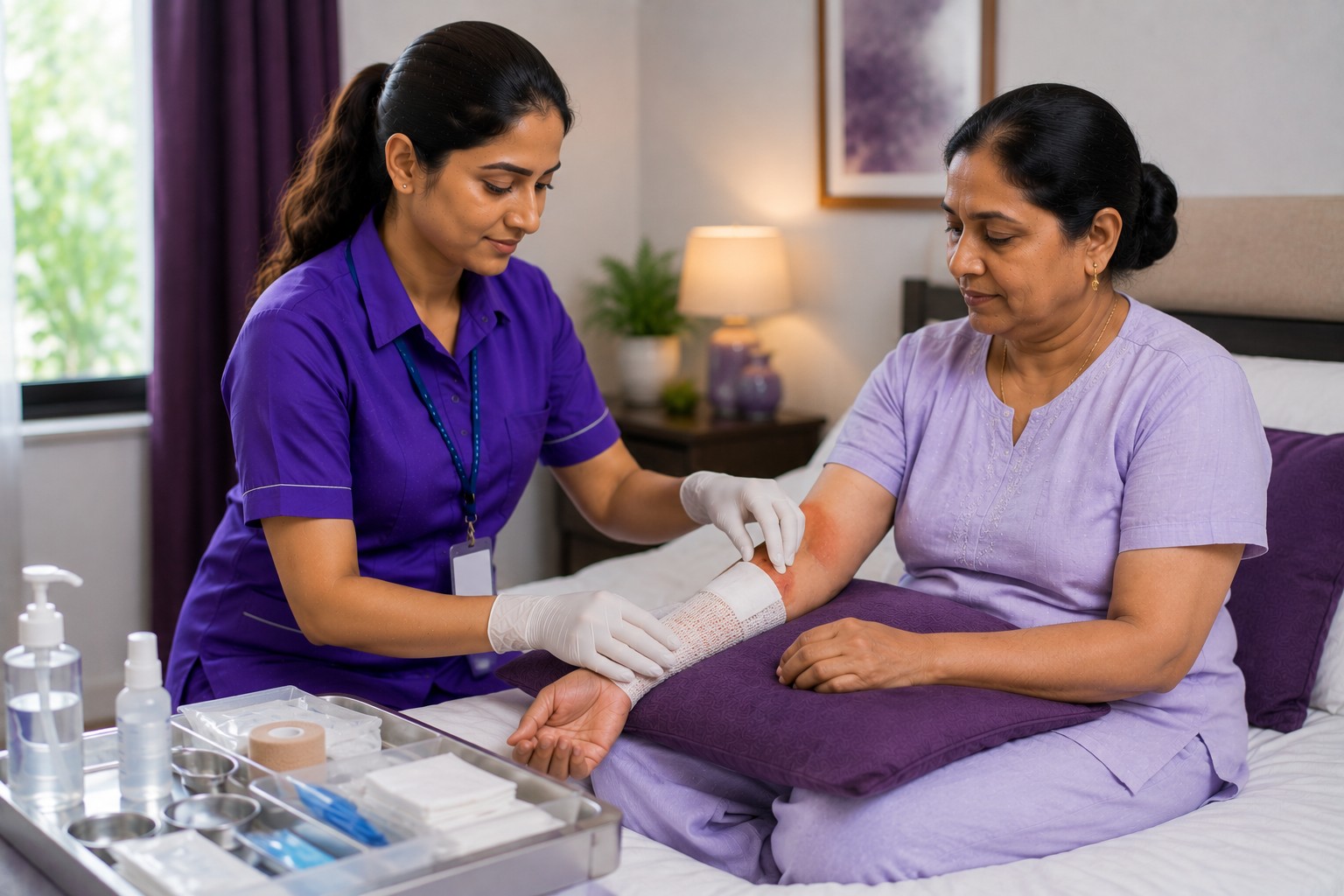
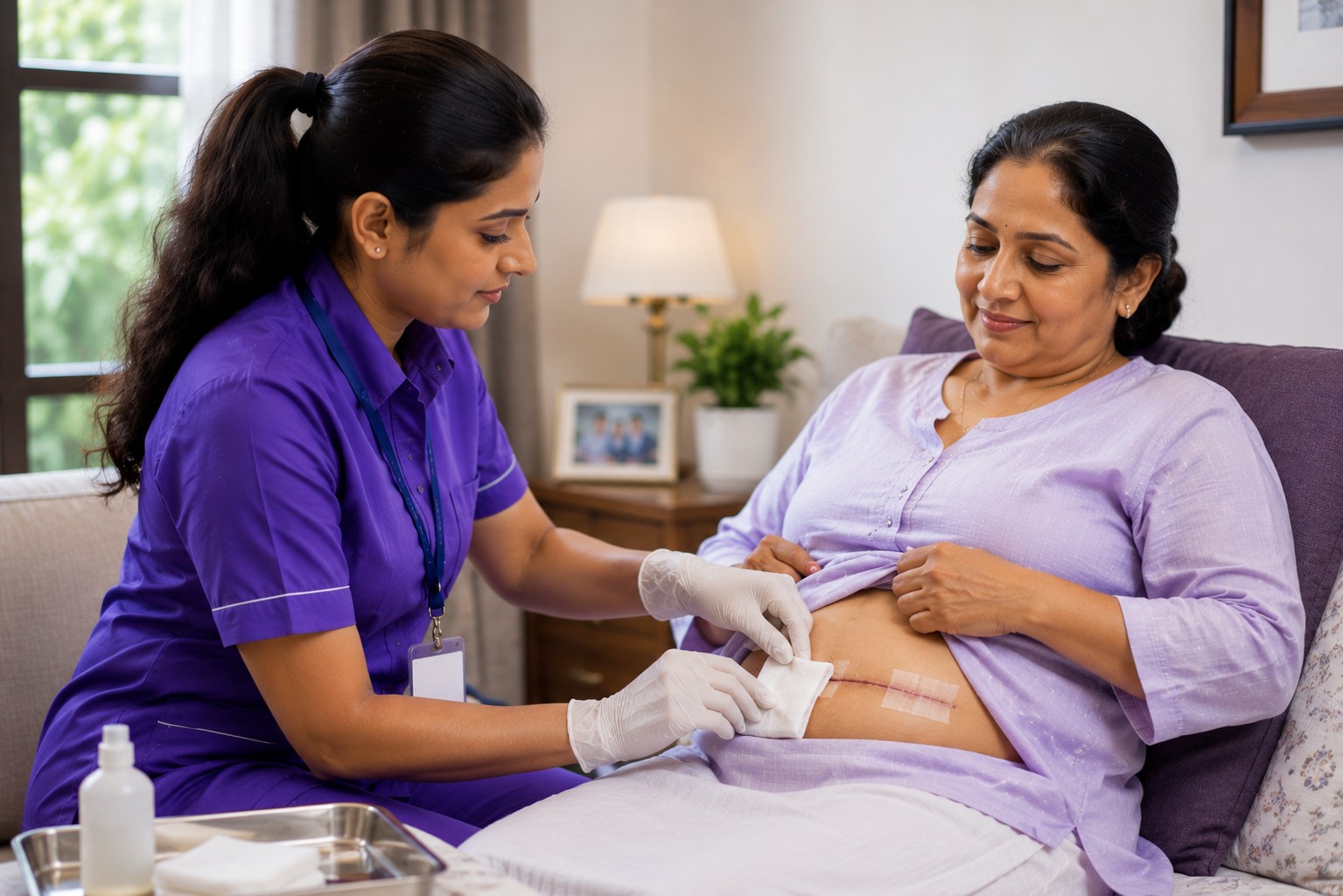
When our trained wound care nurse arrives at your home, they will begin by assessing your wound and the current dressing. They will then prepare a sterile field to ensure a clean environment. The old dressing will be gently removed, and the wound will be thoroughly cleaned using appropriate solutions. After a careful inspection, a new sterile dressing will be applied according to best practices and your specific needs. Our nurse will also provide clear instructions on wound care between visits, answer any questions you may have, and ensure you feel comfortable and informed throughout the entire process. Your privacy and dignity are always respected.
To ensure a smooth and effective wound dressing session, please have the wound area easily accessible. If you have any specific wound care products you prefer or have been instructed to use, please have them ready. It's also helpful to have a clean, well-lit space available for the nurse to work. After the dressing change, follow the specific instructions provided by our nurse regarding keeping the dressing clean and dry, and when to schedule your next appointment. If you notice any signs of infection, such as increased redness, swelling, pain, or discharge, please contact us immediately.
Govindpuram residents can access a wide range of healthcare services from the comfort of home. Our experienced professionals provide nursing, diagnostics, injections, elderly care, dressing, monitoring, and many more services with proper safety standards. Every booking is handled by trained providers suited to the required service. We aim to make healthcare simple, timely, and stress-free for patients and their families. Flexible scheduling and prompt support help reduce unnecessary hospital visits. Care At Door brings dependable medical assistance directly to your doorstep.
Book Your Appointment
Easily book your Basic Wound Dressing service by sending us a message on WhatsApp or by visiting our website. Let us know your preferred time and date.
Confirmation and Scheduling
Once we receive your request, our team will confirm your booking and schedule a convenient time for our nurse to visit you. We'll keep you updated every step of the way.
Professional Nurse Arrives
Our skilled and compassionate nurse will arrive at your home at the scheduled time, equipped with all necessary sterile supplies for your wound dressing.
Expert Care and Follow-up
The nurse will perform the wound dressing with utmost care and hygiene, ensuring your comfort. We also provide simple guidance for continued healing and can arrange for follow-up care if needed.
Verified Professionals
Our nurses are trained in sterile techniques and best practices for effective wound management, ensuring your healing is in expert hands.
Safe & Hygienic
We use sterile consumables and sanitized equipment for every dressing change, minimizing infection risk and promoting a clean healing environment.
Home Convenience
Avoid the discomfort of travel. Receive expert wound dressing care in your familiar surroundings, allowing for rest and quicker recovery.
Transparent Pricing
Clear, upfront pricing for all dressing sizes. You know the cost before we arrive, and payment is only after the service is completed.
Clinical Excellence
Our nurses follow evidence-based protocols for accurate wound assessment and optimal dressing application, crucial for preventing complications and aiding recovery.
Specialized Care
Get specialized, attentive wound care without the stress of hospital visits. We bring the expertise and care directly to your home for your comfort.
We provide doorstep healthcare services across the following areas in Govindpuram.
Our Basic Wound Dressing service includes a clean and sterile dressing change performed by our trained nurses at your home. We ensure proper hygiene and care to support your healing process, whether it's for post-surgery recovery, minor injuries, or chronic wounds.
The cost of the Basic Wound Dressing service starts at ₹199. This price is in addition to any applicable visit fee. The final cost will depend on the size of the dressing needed (Small, Medium, or Large), which ranges from ₹199 to ₹399. Payment is collected after the service is completed.
A typical wound dressing session usually takes between 15 to 30 minutes. The exact duration can vary slightly depending on the complexity of the wound and the type of dressing required.
Yes, it is very safe. Our nurses are highly trained and follow strict sterile procedures to prevent infection. We use all necessary sterile equipment and follow best practices to ensure your safety and promote effective healing in the comfort of your home.
Please ensure the area around the wound is clear and accessible. It's also helpful to have a clean, well-lit space available for the nurse. If you have any specific instructions from your doctor regarding the wound, please keep them handy.
Your wound dressing will be performed by one of our qualified and trained wound care nurses. They have the expertise to manage various types of wounds and ensure professional care.
After the dressing is changed, our nurse will provide you with clear instructions on how to care for the wound until the next dressing change. This may include advice on keeping the wound clean and dry, signs to watch for that might indicate a problem, and when to schedule your next appointment.
We provide diagnostics, nursing, injections, ambulance support, X-rays, and many other healthcare services. Availability depends on your location and booking time.
Bookings can be made through WhatsApp. You may choose immediate assistance or schedule a convenient time.
Services are delivered by trained and verified healthcare professionals. Providers are assigned based on the required expertise.
Yes, our professionals follow appropriate hygiene and safety practices. Patient comfort and safety remain our priority.
Yes, you can arrange services for parents, children, or other family members. Simply provide patient details during booking.
Yes, services are available throughout the week. Some services are also offered 24/7.
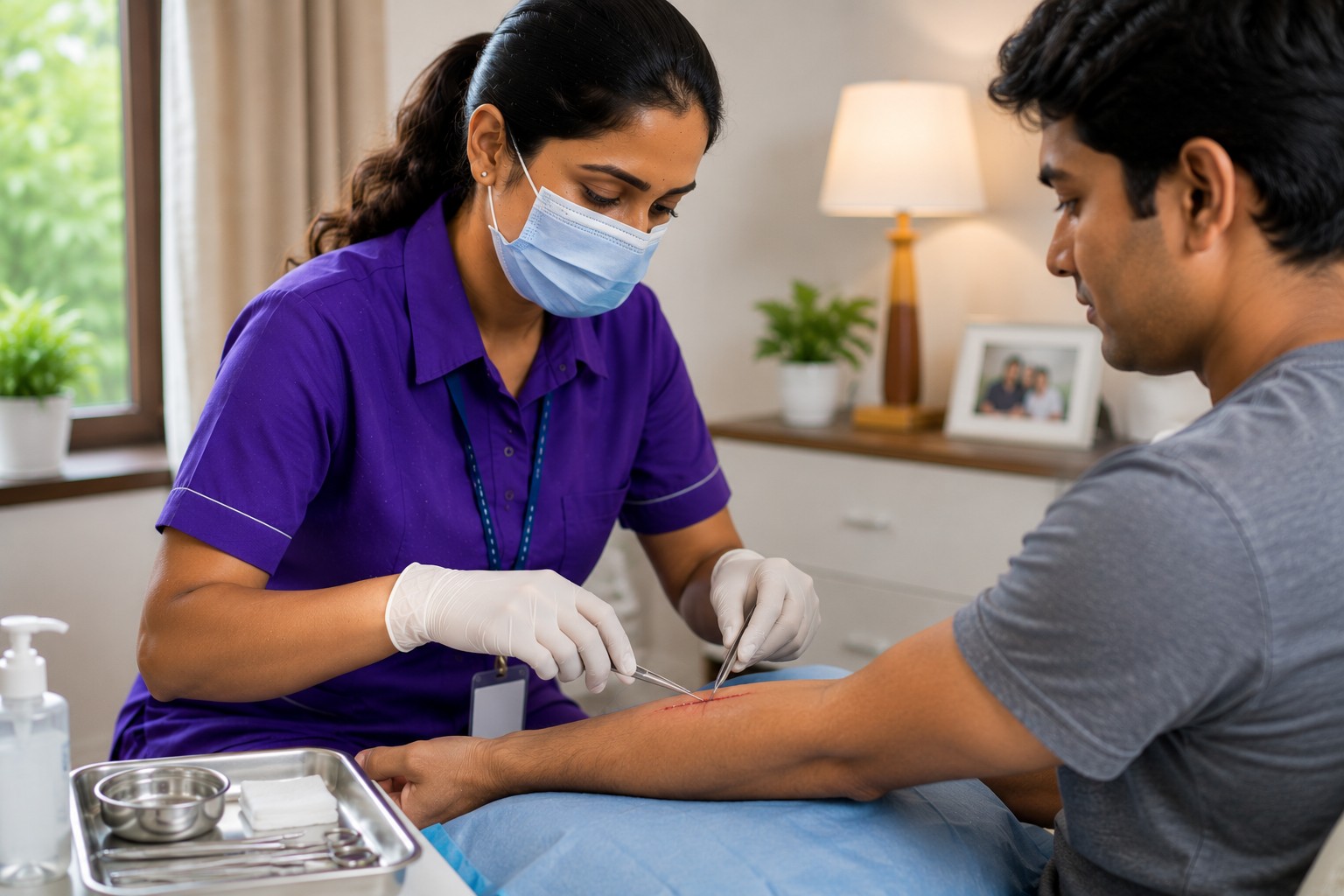
Professional healthcare at your doorstep. Book now on WhatsApp.
Book on WhatsApp