
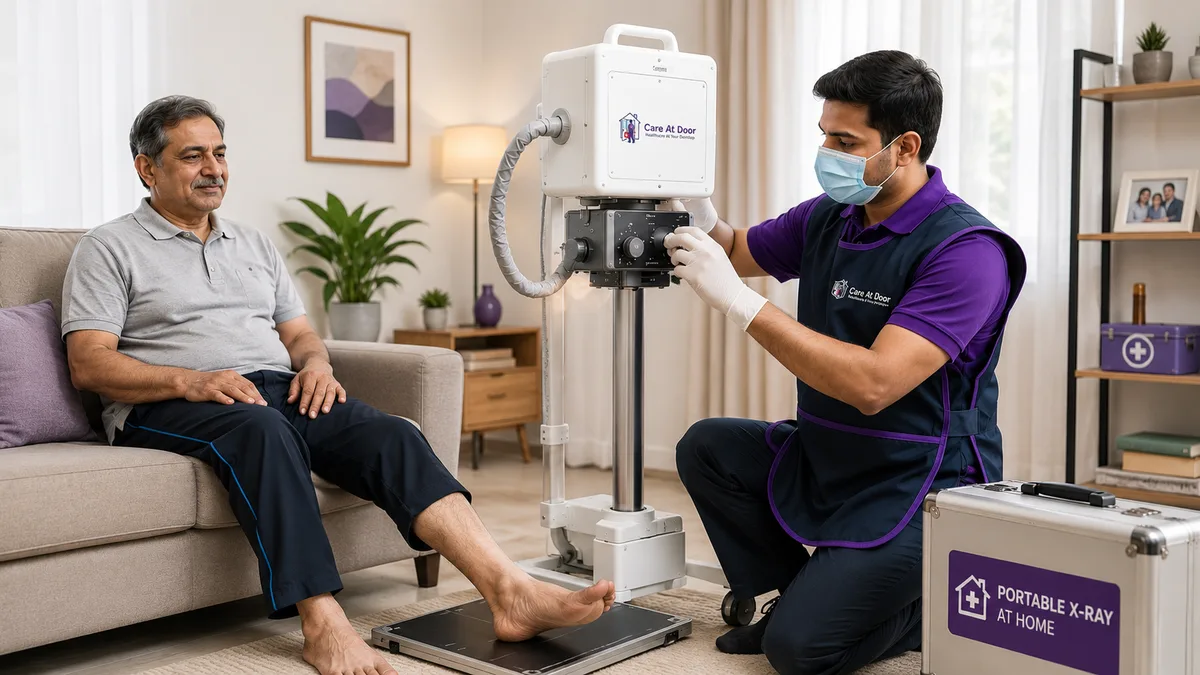
Portable X-Ray at Home: A Safe and Convenient Alternative to Hospital Visits
Understanding how home X-ray services make diagnostic imaging more accessible for patients who find traveling to a hospital difficult.
Understanding how home X-ray services make diagnostic imaging more accessible for patients who find traveling to a hospital difficult.
When someone suffers an injury, experiences severe pain, or is unable to walk comfortably, even a simple trip to a hospital for an X-ray can become physically exhausting. This challenge is even greater for elderly individuals, bedridden patients, people recovering from surgery, or those with limited mobility.
Advances in home healthcare have made diagnostic imaging more accessible through portable X-ray at home services. Instead of transporting the patient to a hospital, trained healthcare professionals can bring portable digital X-ray equipment directly to the patient's home, allowing eligible imaging studies to be performed in a familiar and comfortable environment.
This article explains how portable X-ray at home works, who may benefit from it, its advantages, and what patients can expect during the process.
What Is a Portable X-Ray at Home?
A portable X-ray at home is a diagnostic imaging service where qualified healthcare professionals use a mobile digital X-ray machine to perform X-ray examinations at the patient's residence.
The images are captured using modern digital technology and are reviewed by a qualified radiologist, who prepares the official report for the referring doctor. The treating physician then uses the report, along with the patient's medical history and examination findings, to make clinical decisions.
Portable X-ray services are intended to provide convenient access to diagnostic imaging while maintaining professional standards of patient care.
Who Can Benefit from a Home X-Ray Service?
Portable X-ray services may be appropriate for patients who have difficulty visiting a hospital, including:
- Elderly individuals with limited mobility
- Bedridden patients
- Patients recovering after surgery
- Individuals with fractures or suspected bone injuries
- People experiencing severe joint or back pain
- Patients with neurological conditions that limit movement
- Individuals requiring follow-up imaging as advised by their doctor
- Patients receiving long-term home healthcare
The decision regarding whether a home X-ray is appropriate depends on the patient's condition and the type of imaging required.
Common Situations Where a Portable X-Ray May Be Helpful
A healthcare provider may recommend portable X-ray services in situations such as:
Suspected Bone Fractures
After a fall or injury, an X-ray helps assess whether a bone has fractured and assists the treating doctor in planning further care.
Elderly Patients
Older adults may find hospital visits physically demanding due to arthritis, weakness, or multiple medical conditions. Home imaging reduces unnecessary travel.
Bedridden Patients
Transporting bedridden patients often requires significant assistance and may cause discomfort. Portable X-ray services allow imaging without moving the patient unnecessarily.
Post-Surgical Follow-Up
Some patients recovering from orthopedic or other surgeries may require follow-up X-rays as advised by their doctor. Home imaging can make these follow-up examinations more convenient.
Patients Receiving Home Medical Care
Patients already receiving nursing care, physiotherapy, or other home healthcare services may benefit from coordinated diagnostic imaging at home when clinically appropriate.
How Does a Portable X-Ray at Home Work?
Although the exact process may vary between providers, it generally includes the following steps:
1. Service Booking
The patient or caregiver requests the service and shares the doctor's prescription or clinical requirement, where applicable.
2. Appointment Scheduling
A suitable appointment is arranged based on the patient's location and medical needs.
3. Home Visit
A trained healthcare professional arrives with a portable digital X-ray machine and necessary protective equipment.
4. Image Acquisition
The required X-ray images are taken while ensuring patient comfort, proper positioning, and radiation safety.
5. Report Generation
The digital images are reviewed by a qualified radiologist, and an official report is prepared for the referring doctor.
Benefits of Portable X-Ray at Home
Portable X-ray services offer several practical advantages for eligible patients.
Greater Comfort
Patients can undergo imaging in familiar surroundings without the physical stress of traveling.
Reduced Hospital Visits
Home imaging minimizes transportation challenges for patients with mobility limitations.
Convenience for Families
Caregivers often avoid arranging ambulances, wheelchairs, or multiple family members for hospital transportation.
Faster Access to Imaging
Depending on availability, home X-ray services may help patients receive diagnostic imaging sooner than arranging hospital transport.
Improved Continuity of Home Healthcare
Diagnostic imaging can be coordinated alongside other home healthcare services when appropriate.
Is Portable X-Ray Safe?
Portable X-ray machines use the same basic X-ray technology as those used in many healthcare facilities, although equipment design may differ.
Qualified professionals follow established radiation safety practices, including:
- Appropriate patient positioning
- Use of protective equipment when required
- Minimizing unnecessary radiation exposure
- Following standard imaging protocols
- Maintaining equipment according to applicable quality standards
Like any medical imaging procedure, an X-ray should only be performed when clinically justified by a qualified healthcare professional.
What Types of X-Rays Can Be Performed at Home?
Depending on the equipment available and the clinical requirement, portable X-ray services may include imaging of:
- Chest
- Hand
- Wrist
- Elbow
- Shoulder
- Arm
- Foot
- Ankle
- Leg
- Knee
- Hip
- Pelvis
- Spine (selected cases)
The availability of specific examinations may vary. Some complex imaging studies may still require a hospital or diagnostic imaging center.
When Is a Hospital Visit Still Necessary?
While portable X-ray services are highly useful in many situations, they cannot replace every hospital-based imaging examination.
Hospital evaluation may still be necessary when:
- Emergency medical treatment is required
- Advanced imaging such as CT scan or MRI is needed
- Multiple diagnostic procedures are required immediately
- Surgical intervention is anticipated
- The patient's condition requires continuous hospital monitoring
A qualified healthcare professional can advise which option is most appropriate.
Tips Before Your Home X-Ray Appointment
To help ensure a smooth examination:
- Keep the doctor's prescription available, if provided.
- Wear comfortable clothing unless instructed otherwise.
- Inform the healthcare professional about pregnancy or possible pregnancy before the examination.
- Keep the examination area accessible.
- Follow any instructions provided before the appointment.
Professional Portable X-Ray at Home
If your doctor recommends a home X-ray, Care At Door provides portable X-ray at home services through trained healthcare professionals in Noida, Ghaziabad, and nearby areas of Delhi NCR. When clinically appropriate, the service helps eligible patients receive diagnostic imaging at home while reducing the challenges associated with hospital travel.
Frequently Asked Questions
Requirements may vary depending on local regulations and the type of examination. Many X-ray services require a valid prescription from a registered medical practitioner.
The imaging procedure itself is often completed within a short time, although the total visit duration depends on patient positioning, the type of examination, and clinical needs.
Modern portable digital X-ray systems can produce high-quality diagnostic images when used appropriately by trained professionals. Images are interpreted by qualified radiologists.
In many cases, yes. Portable equipment allows trained professionals to perform appropriate imaging while minimizing unnecessary patient movement.
Not always. The suitability depends on the patient's condition, the body part being examined, and whether advanced imaging or hospital care is required.
Share this article
Professional Portable X-Ray at Home
Safe home X-ray services by trained healthcare professionals.
Book Nowⓘ Medical Disclaimer
This article is for educational purposes only. It should not replace professional medical advice, diagnosis, or treatment. If you have symptoms or a medical emergency, consult a qualified healthcare professional.